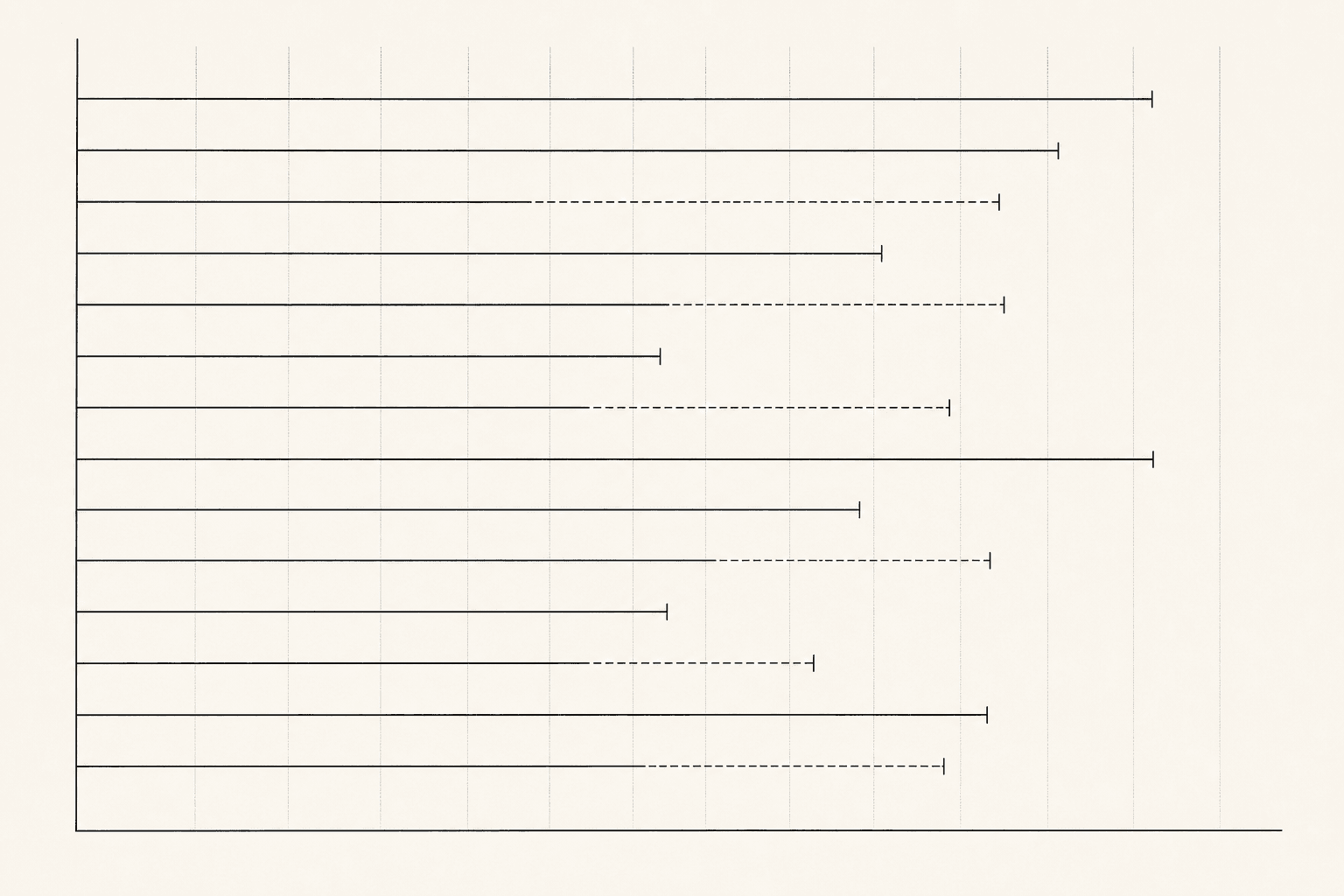
Plan
Six steps, asynchronous
Agents research and structure. Your own people challenge, edit and sign off each step. Every unsigned line is labelled Draft.
XXAI · Prospectus
Release 2026-08-24 · Nordic · Open sources only
A maintained Plan, not a document
XXAI turns the strategy you already have into a Plan that knows what it assumed. Each week it checks those assumptions against dated evidence, and names the decision now standing on nothing.
Nothing to sign up for here, and nothing is for sale yet. The Assumption Audit opens first, at €390, VAT excluded.
Extracted 2026-08-24 09:12 UTC
Clients will keep paying for advisory work priced by the hour.
Unresolvednot yetOur senior people are the scarce resource in every engagement.
Unresolvednot yetNo competitor can produce a comparable report inside a week.
Unresolvednot yetPublic procurement keeps favouring incumbent framework suppliers.
Unresolvednot yetRegulatory reporting work grows faster than we can staff it.
Unresolvednot yetOur regional offices are the reason we win local mandates.
Unresolvednot yet6 of 14 shown · none checked yet
Specimen wording for a professional-services firm of 400 staff. Not a client register.
Give us the document you already have. XXAI reads it and lists the assumptions it rests on, each with the sentence it came from. No commentary, no scoring, no colour.
Most organisations have never seen these sentences in one place. A plain numbered list is the sharpest thing we can show you.
Every one starts Unresolved
An organisation spends six weeks and a great deal of expert time producing a strategy. The document describes a world. The world then moves. Nobody rewrites the document, because rewriting it costs another six weeks.
So decisions keep being made against assumptions that quietly expired. Nobody can say which ones. This is not a knowledge problem. It is a maintenance problem.
The people who carry this are the ones personally accountable for the strategy holding up: heads of strategy and operations, continuity and preparedness leads.
They already did the work once. They know parts of it are no longer true, and they cannot prove which parts. They need a defensible answer when a board member asks whether the plan still holds.
What answers that question today
Each describes the future. None of them maintains a commitment.
Watch asks one narrow question each week: did anything happen that breaks something we assumed? Findings attach to the assumption they bear on, dated and sourced.
An assumption is Broken only when a named person confirms it and signs. The system narrows the options and exposes the consequence. It never chooses.
Cycle 2026-08-17 · 14 checked
Clients will keep paying for advisory work priced by the hour.
Broken2026-08-17Our senior people are the scarce resource in every engagement.
Unresolved2026-08-17No competitor can produce a comparable report inside a week.
Broken2026-08-17Public procurement keeps favouring incumbent framework suppliers.
Holds2026-08-17Regulatory reporting work grows faster than we can staff it.
Holds2026-08-17Our regional offices are the reason we win local mandates.
Holds2026-08-172 broken · 1 unresolved · 11 hold
Broken
Decisions resting on this assumption: the 2027 pricing model, and the senior hiring plan.
Broken · signed by the head of operations · 2026-08-02 14:30 UTC
Specimen. In the product every line links to the source it came from, and the Break record is a one-page document you can put in a board pack.
Militaries solved this long ago, not by guessing better, but by treating a plan as a structured object: explicit assumptions, named forces, branches, decision points, a defined end state.
When reality contradicts an assumption, you know exactly which branch just became invalid. Language models make that structure cheap to build, and cheap to keep alive.
The two X’s are the two unknowns in any strategic situation: what the world does next, and what the counterforce does next. Classical planning solves for one and pretends the other is fixed. We hold both as variables.
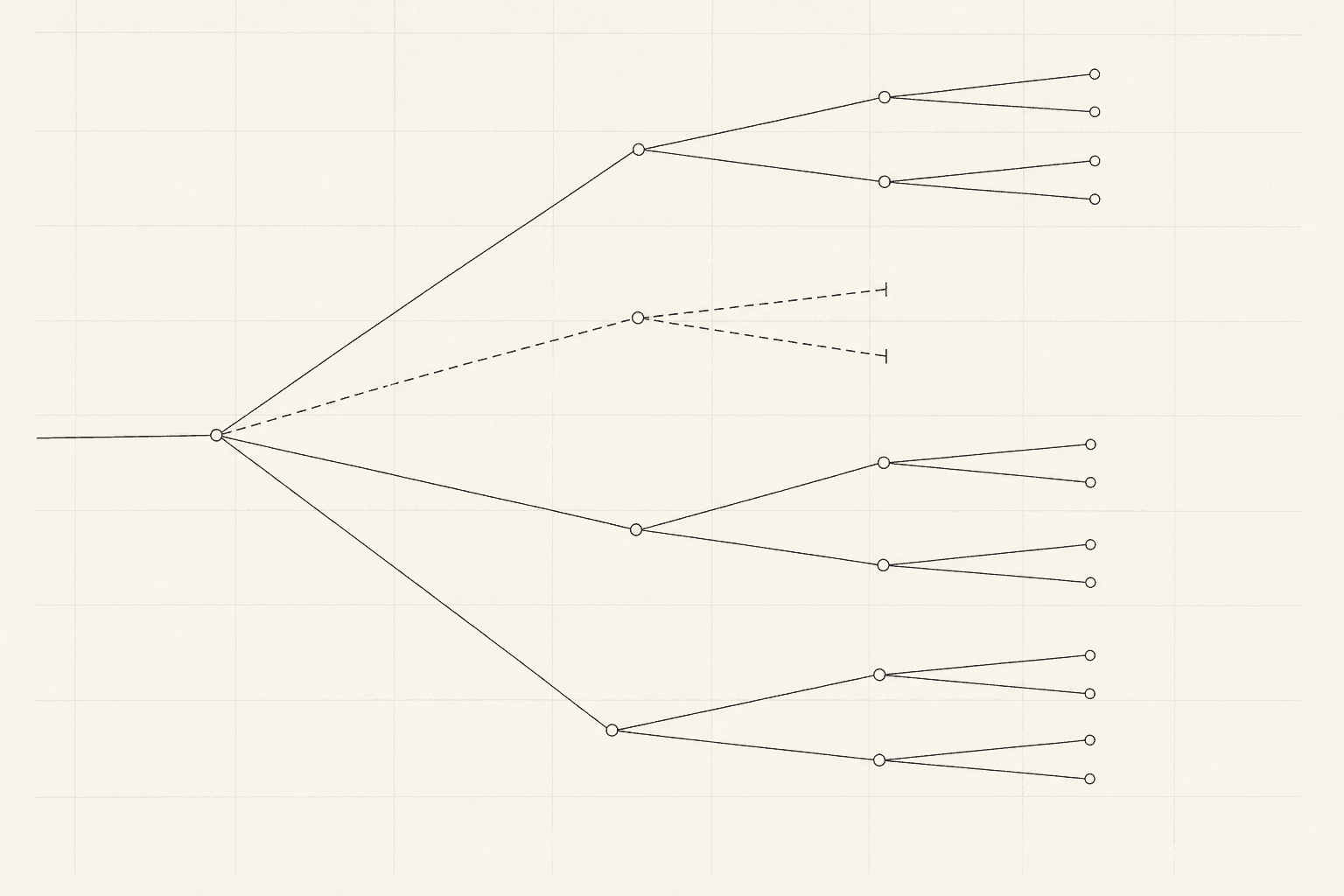
Figure 1 · scenario branches, two invalidated
Where the organisation actually stands, stated plainly.
What could move against you, and for you.
What pushes the situation forward, and what pushes back.
The alternative courses the situation may take.
Where a choice must be made, and by whom.
The outcome the Plan is built to reach.
Six steps, asynchronous
Agents research and structure. Your own people challenge, edit and sign off each step. Every unsigned line is labelled Draft.
One question each week
Did anything happen that breaks something we assumed? Evidence comes from open sources and any feed you pin to a named assumption.
Execution against the Plan
Decision points with dates and owners, and a Revision history showing what changed, on what source, signed by whom.
A plan you cannot inspect cannot be defended to a board, a regulator or a parliamentary committee. So the reasoning is built to be checked rather than to impress.
Every machine-written line carries the Draft label until a named person signs it. XXAI narrows options and exposes consequences. It never decides.
XXAI works on open sources and the material you supply. It does not watch people. The hosted product cannot take classified input, and we say so before anyone has to ask.
A consultancy sells the sprint and walks away. XXAI sells the audit and the Plan in order to sell the maintenance, which is where the value sits.
Prices in euros, VAT excluded. Nothing is for sale on this page yet.
The engine in public
XXAI takes a publicly published strategy, states its assumptions, and publishes which ones open evidence already contradicts. Sourced and dated. Never naming or mocking a person: the subject is always a document.
The first audits arrive with the product. Until then this page is the whole of it, and the honest thing is to say so.